The Tiny Superpower in Microbes: How Bacteria Are Brewing the Future of Plastic 🌱
Forget everything you think you know about plastic. What if the solution to our global plastic pollution crisis wasn't found in a high-tech lab, but inside tiny, salt-loving bacteria?
Welcome to the fascinating world of PHA (Polyhydroxyalkanoates) — a family of natural polymers that bacteria produce as their own energy storage. Think of it as their personal stash of "microbial fat." And scientists have figured out how to turn this bacterial superpower into the next generation of sustainable materials.
🌍 Why We Need a Material Revolution
- We use 1 million plastic bottles every minute.
- Microplastics are now found in our food, water, and even our bodies.
- By 2050, plastics could account for 15% of the global carbon budget.
Clearly, petrochemical plastics aren't working. We need something that performs like plastic but behaves like nature.
🦠 Meet the Heroes: Halophilic Bacteria
The real innovation isn't just what is made, but how it's made. Enter Next-Generation Industrial Biotechnology (NGIB), which uses halophiles — bacteria that thrive in salty conditions.
Here’s why they’re game-changers:
| Traditional Biomanufacturing | NGIB with Halophilic Bacteria |
|---|---|
| Requires sterile conditions 🧫 | Open, non-sterile fermentation 🌊 |
| High energy & water use 💧 | Low water consumption, uses seawater |
| Complex purification 🔬 | Simple, low-cost recovery |
| Slow & expensive 🐌 | Scalable & cost-effective 📈 |
Because these bacteria live in extreme salt, few other microbes can survive alongside them. This means no expensive sterilization, less water, and a radically simpler process.
♻️ PHA: The “Disappearing” Plastic
PHA isn’t just biodegradable — it’s naturally digestible by microorganisms in almost any environment:
| Environment | Time to Degrade | Certification |
|---|---|---|
| Ocean 🌊 | ≤ 6 months | TÜV Austria OK Marine Degradable |
| Soil 🌱 | ≤ 2 years | DIN CERTCO Soil Degradable |
| Home Compost 🏡 | ≤ 12 months | OK Home Compostable |
| Freshwater 💧 | ≤ 56 days | TÜV Austria OK Freshwater Degradable |
And yes — it’s certified for food contact in China, the US, and the EU.
🚀 From Lab to Real World
This isn’t just science fiction. PHA is already shaping products around us:
- Paper coatings for cups and containers
- Straws that disappear in months, not centuries
- 3D printing filaments that are 100% bio-based
- Medical implants that safely absorb into the body
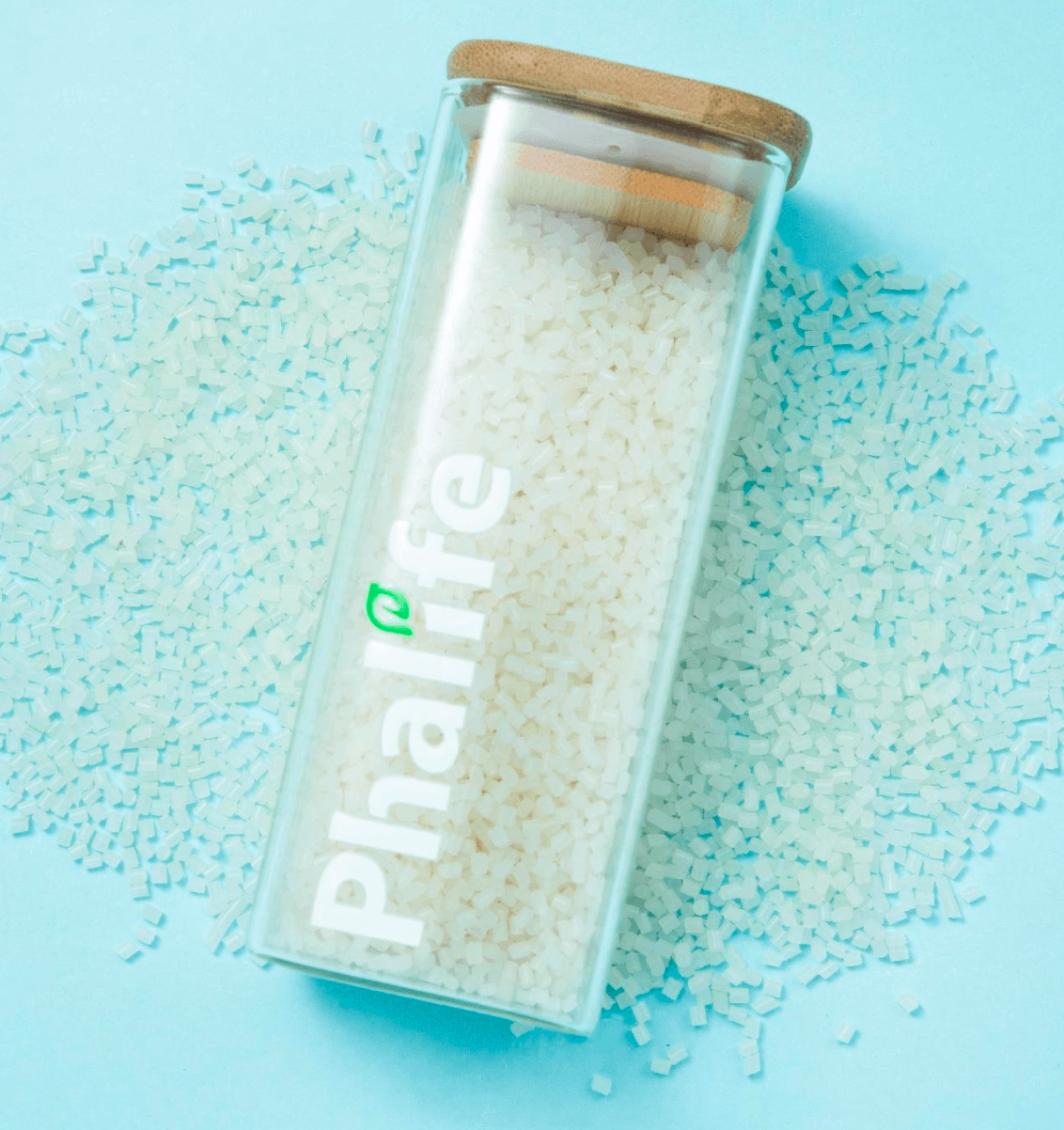
Image suggestion: A close-up photo of PHA granules next to a plant, symbolizing its bio-based origin.
Image suggestion: An infographic showing how halophilic bacteria ferment in salty broth to produce PHA.
🔬 The Science of Scale
The magic is in the “4-Step PHA Strategy”:
- PHAmily – Explore over 10 billion possible PHA combinations 🧬
- PHAbrary – Build a material database linking structure to function 📚
- PHAdustry – Scale up using AI, digital twins, and Industry 4.0 🏭
- PHA Life – Bring products to market, from packaging to medical devices 🏥
This isn't just making one plastic — it's creating a material genome that can be tailored for anything from flexible films to rigid implants.
🌱 A Carbon-Negative Future?
Perhaps the most stunning fact:
Producing 1 ton of PHA can result in -1.3 kg CO₂e over its lifecycle. That’s carbon negative — turning manufacturing from a climate problem into a climate solution.