The “Golden Pigment” from the Deep Sea: How Fucoxanthin Can Quietly Boost Your Health 🧪🌊
Have you ever heard of a natural pigment hidden in microalgae that not only helps algae survive in the deep ocean but may also have surprising benefits for human metabolic health? Today, let’s talk about this understated “algae gold”—Fucoxanthin.
🧬 What is Fucoxanthin?
Fucoxanthin is a natural carotenoid found mainly in brown algae and diatoms. It’s one of the most abundant carotenoids in nature and acts as a “light harvester” in photosynthesis.
| Property | Description |
|---|---|
| Chemical Formula | C₄₂H₅₈O₆ |
| Molecular Weight | 658.92 g/mol |
| Solubility | Fat-soluble, insoluble in water |
| Absorption Peak | 440–470 nm (blue-green region) |
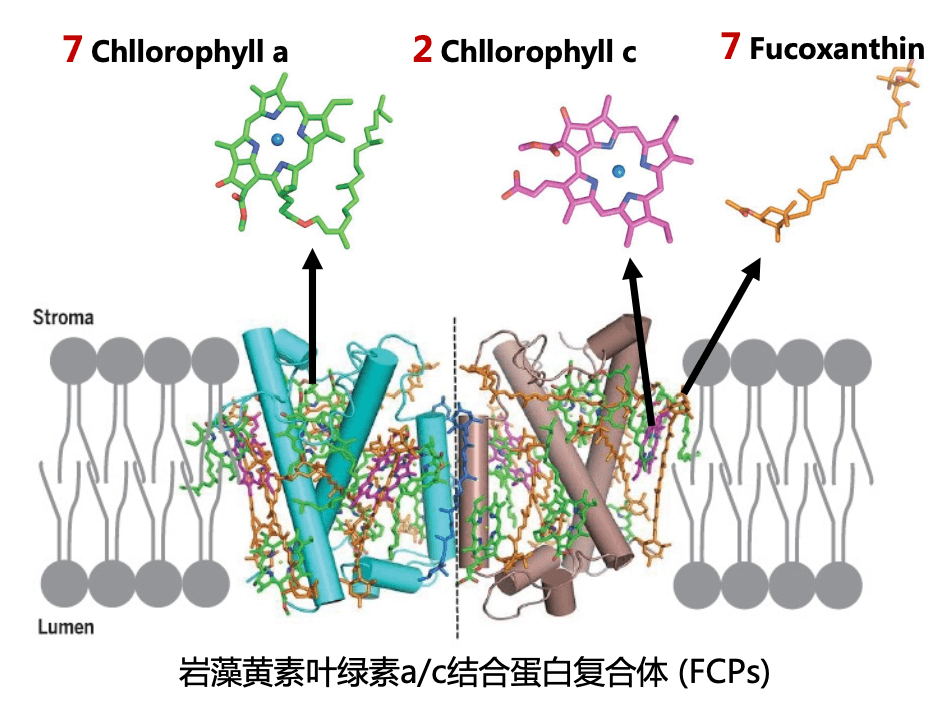
It usually binds with chlorophyll a and c to form Fucoxanthin-Chlorophyll Protein complexes (FCPs), helping algae perform photosynthesis in low-light deep-sea environments.
⚙️ How Does It Work in the Body?
Fucoxanthin has gained attention due to its positive effects on metabolic health observed in multiple animal studies, particularly related to fat metabolism, liver health, cardiovascular function, and skin inflammation.
🔥 1. Promotes Fat Metabolism
- Activates UCP1 protein in white adipose tissue (usually found only in brown fat), boosting fat breakdown.
- Inhibits fatty acid synthase (FAS) expression, reducing new fat formation.
- Modulates insulin receptor signaling to decrease glucose uptake in fat cells.
🧠 2. Improves Non-Alcoholic Fatty Liver Disease (NAFLD)
In high-fat diet mouse studies, fucoxanthin showed:
- Reduced liver oxidative stress (↓MDA, ↑SOD)
- Less liver inflammation and fibrosis
- Increased liver glycogen and protein synthesis
- Outperformed statin drugs with no negative impact on liver function
❤️ 3. Supports Cardiovascular Health
- Lowers serum total cholesterol and LDL (“bad” cholesterol)
- Slows atherosclerosis plaque formation
- Inhibits excessive proliferation of aortic smooth muscle cells
🧴 4. Reduces High-Fat Diet-Induced Skin Issues
Experiments showed fucoxanthin can:
- Reduce hair loss
- Decrease sebaceous gland enlargement and cholesterol crystal deposition
- Improve skin inflammatory responses
🧪 A Glimpse at the Experiment: Fucoxanthin vs. Statin
In a comparative study, fucoxanthin lowered triglycerides and LDL without increasing creatine kinase (CK) or liver enzymes (ALT/AST), while the statin group showed some side effects.
| Marker | Fucoxanthin Group | Statin Group |
|---|---|---|
| Triglycerides | ↓ Decreased | ↓ Decreased |
| LDL-C | ↓ Decreased | ↓ Decreased |
| Liver Enzymes | No significant change | Slight increase |
| Creatine Kinase | Unchanged | Slight increase |
🌿 Natural Source & Future Potential
Fucoxanthin is mainly extracted from marine diatoms (such as Phaeodactylum tricornutum) through large-scale microalgae cultivation. Its natural, multi-target, and low-toxicity profile makes it promising for functional foods, dietary supplements, and more.
📸 Suggested Images (to add visually)
- A microscopic image of diatoms showing the natural source of fucoxanthin
- Diagram of FCP complex structure to illustrate its role in photosynthesis
- Experimental comparison: liver tissue staining (normal vs. high-fat diet vs. fucoxanthin-treated)
- Chart: blood lipid level changes across groups