🍃 Fungal Assassins: When Microbes Become Agriculture’s “Precision Agents”
Hey there! Today we’re diving into a story that sounds a bit sci-fi but is actually already happening in fields around the world: using fungi to fight pests. That’s right—this isn’t magic or alien tech, but a super cool branch of biopesticides known as fungal insecticides.
🌍 Why Do We Need “Fungal Assassins”?
Let’s start with some eye-opening data:
| Country/Region | Chemical Pesticide Use per Unit Area (Relative to World Average) |
|---|---|
| 🇨🇳 China | 4.6 times the world average |
| 🇺🇸 USA | 1/5 of China’s usage |
| 🇬🇧 UK | 1/4 of China’s usage |
| 🇯🇵 Japan | 1/1.1 of China’s usage |
China uses nearly 43% of the world’s pesticides on less than 9% of global farmland. This not only pollutes the environment but also threatens food safety, with over 100,000 pesticide poisoning cases annually and frequent food safety scandals like “toxic leeks” and “toxic cowpeas.”
So, is there a smarter, greener solution? Yes—it’s called letting microbes do the work.
🧪 What Are Fungal Insecticides?
Imagine this: a tiny fungal spore lands on an insect, quietly germinates, penetrates the pest’s body, colonizes it from the inside, and turns it into a “zombie.” That’s how fungal insecticides operate.
Meet the “Fungal Hit Squad”:
- Metarhizium → Specializes in locusts and grasshoppers
- Beauveria → Targets a wide range of farm and forest pests
- Paecilomyces lilacinus → Effective against nematodes f They’re eco-friendly, highly specific, and sustainable—real agents of green pest control.
🧬 How Do Fungal Insecticides “Work”?
Here’s their step-by-step mission:
- Attachment: Spores land on the insect.
- Germination: Under the right conditions, they sprout and form infection structures.
- Penetration: Enzymes break down the insect’s cuticle.
- Colonization: The fungus grows inside, releasing toxins.
- Sporulation: The insect dies, and new spores emerge to repeat the cycle.
It’s like a microscopic spy thriller—precise, efficient, and residue-free.
🔬 The Tech Behind the Fungi: Upgrading Nature’s Assassins
Despite their potential, fungal insecticides face some challenges:
| Challenge | Innovative Solution |
|---|---|
| 🧫 Limited strain diversity, high similarity | Develop targeted strains using gene editing to enhance virulence |
| 🧪 Outdated fermentation, low spore yield | Build automated solid-state fermentation systems for higher purity & activity |
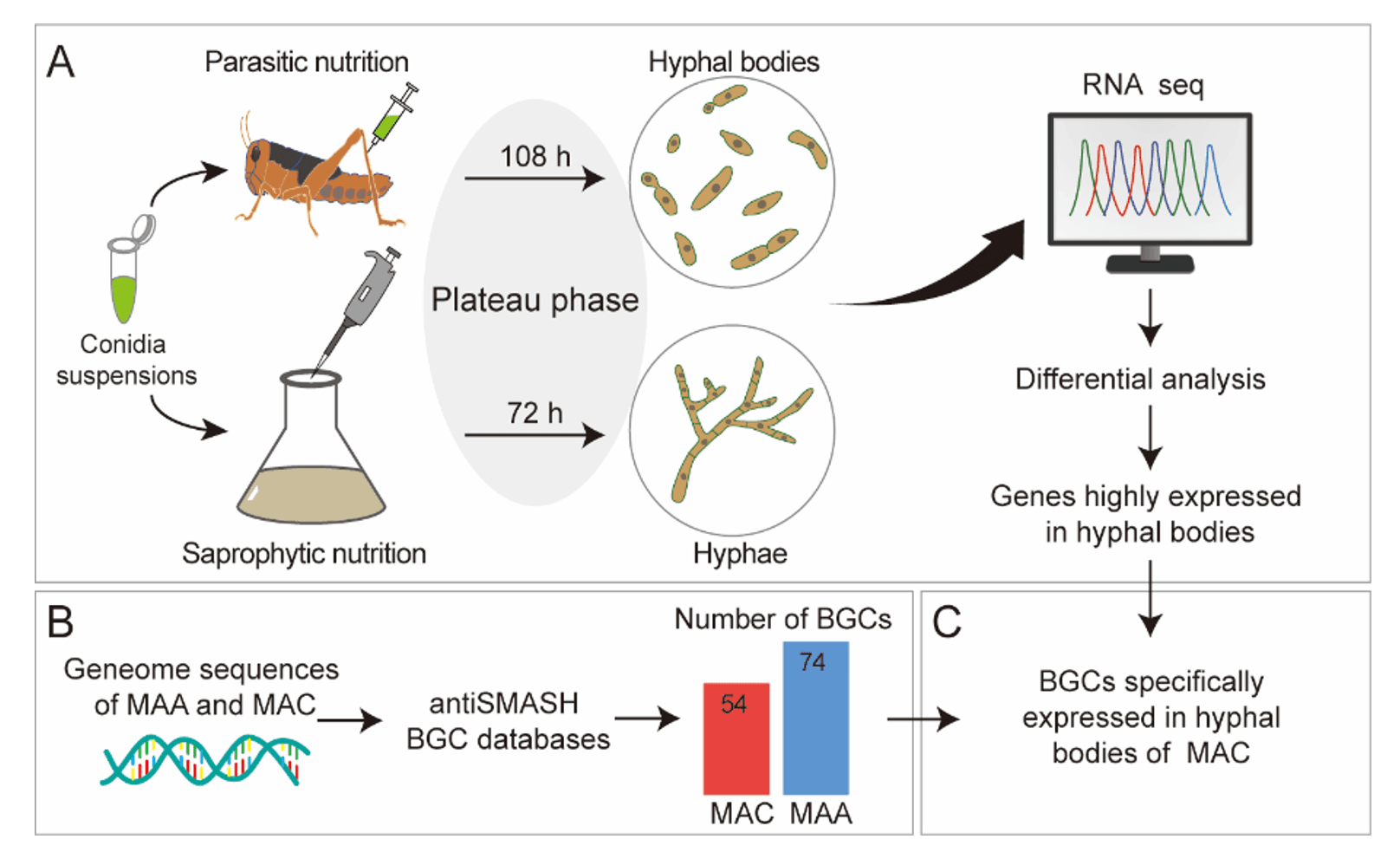
| 🧬 Unknown insect–fungus interaction mechanisms | Use multi-omics (genomics, transcriptomics) to identify key targets |
| 🐞 Insects develop “group immunity” | Study pest ecological immune strategies and design countermeasures |
Scientists are now using gene editing, AI-driven design, and multi-omics analysis to equip fungal insecticides with better “navigation and weaponry.”
🦗 Case Study: Fungi vs. Locusts
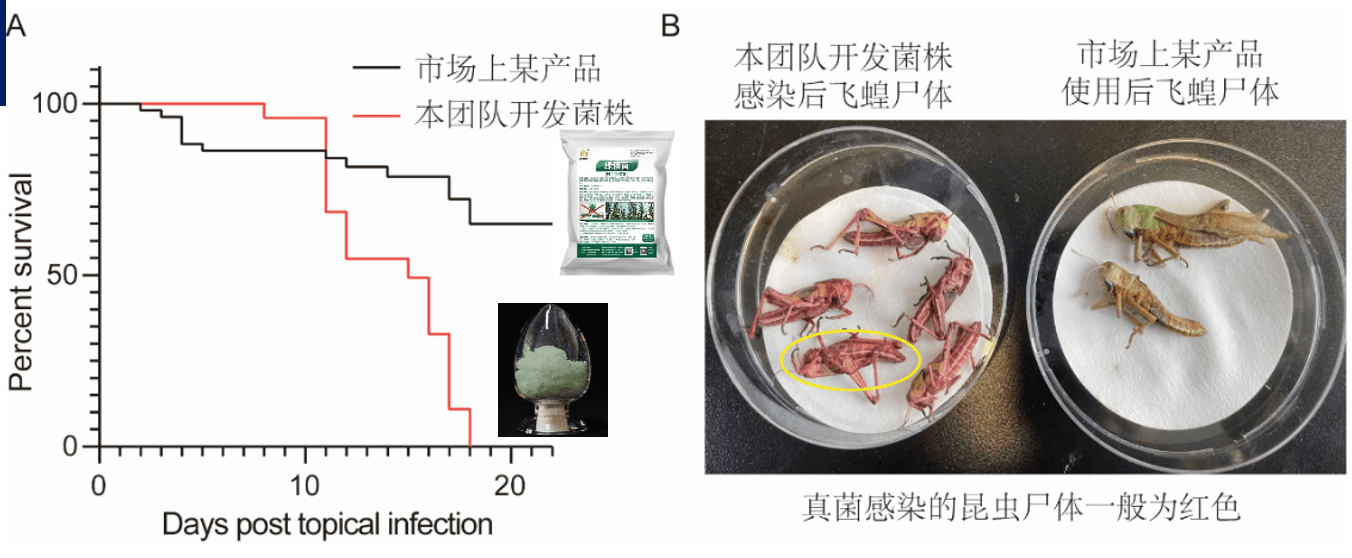
During locust outbreaks, chemical pesticides often fail—especially in sensitive areas like grasslands and wetlands. But Metarhizium delivers a precision strike:
- ✅ Specific to locusts, harmless to other insects
- ✅ Safe for use in chemical-free zones like pastures and wetlands
- ✅ Engineered strains show 15–20% higher lethality
This isn’t just technology—it’s ecological wisdom.
🚀 What’s Next for Fungal Insecticides?
By 2030, biopesticides could occupy 30% of China’s pesticide market, with microbial agents reaching a market size of 4–6 billion CNY.
The future of fungal insecticides looks like:
- 🧠 Smarter: Precision-designed using target molecular databases
- 🏭 More efficient: Large-scale production in 10,000-ton fermentation facilities
- 🌱 Greener: Helping reduce chemical pesticide use by 40%
💚 Greener agriculture starts with understanding a single fungal spore.