The Secrets of Lop Nur: 1.3 Million Years of Human History
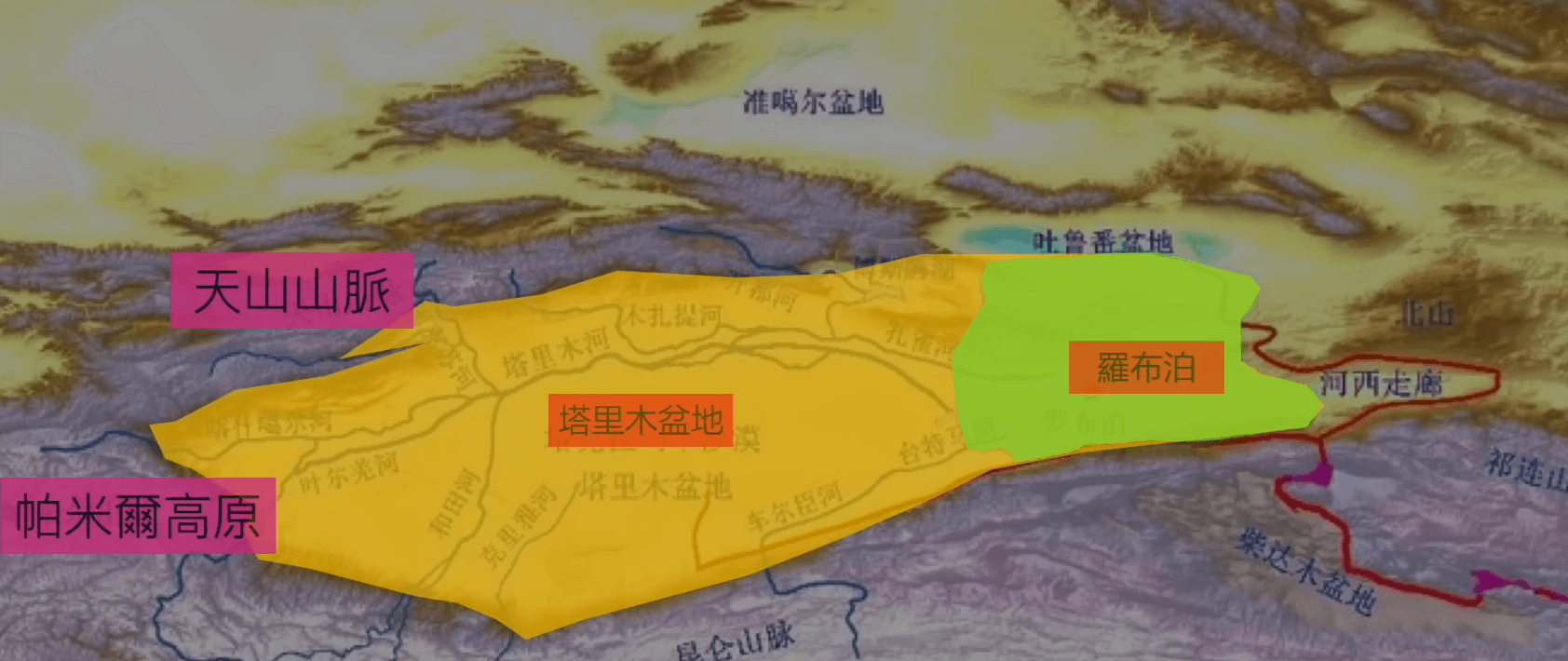
Lop Nur, once China's largest inland lake and the cradle of the Loulan Kingdom, has long been a place of enigma. While early 20th-century discoveries like the "Xiaohe Princess" led many to believe the original inhabitants were Indo-European, the 2014 expedition unearthed a far more complex reality.
1. The Unknown Loulan People
While the famous Xiaohe Princess (4,000 years old) exhibited clear Indo-European features, the new "Lop No. 1 Tomb" revealed remains that belong to neither Indo-European nor Mongoloid groups. For now, experts simply call them the "Unknown Loulan People," suggesting a genetic diversity in ancient Eurasia that history books have yet to record.
2. The Sun Tombs and the Mystery of Number 7 ☀️
Found northwest of the "Great Ear," these tombs feature a central pit surrounded by seven concentric circles of poplar stakes. The precision suggests a ritualistic sacrifice rather than a family burial. Interestingly, the number seven was also revered by the Pythagorean school in Ancient Greece as the "perfect number," representing the order of the cosmos.
The "Refuge" for a Prehistoric Civilization
One of the most shocking discoveries made by Captain Qin Xiaoguang’s team was the "Grey Pit" containing Microliths (tiny, razor-sharp stone blades).
- Age: Carbon-14 dating placed these tools at 11,000 to 13,000 years old.
- Context: This coincides with the Younger Dryas event (approx. 12,900 years ago), a period of global catastrophe sparked by a meteorite impact.
- The Theory: Lop Nur may have served as a "Prehistoric Refuge." Amidst global floods and freezing temperatures, survivors gathered here, building semi-subterranean thatched houses.
The team even found arrows with balance feathers dating back 10,000 years—a technology previously thought to have been invented only 4,000 years ago. This suggests that the inhabitants of Lop Nur were "technological pioneers" of their time.
Solving the "Great Ear" Mystery 👂
For decades, satellite images of Lop Nur showed a giant "ear" shape on the desert floor. Previous theories suggested peninsulas or wind erosion, but 41 deep excavation pits revealed the truth:
- Cyclical Flooding: Lop Nur repeatedly filled with water and dried up, creating rings of salt crust.
- The Pucang Sea: The "ear" shape was formed when the final massive flood (the Pucang Sea) dried up almost overnight during the Wei and Jin dynasties. The receding water didn't form a perfect circle but "cut off" a corner of the existing salt rings, leaving behind the iconic ear shape.
The Great Flood and Climate Cycles
Perhaps the most conservative estimate debunked by the team was the date of the last "Great Flood." While many assumed it happened thousands of years ago, Carbon-14 dating of poplar trunks swept into the riverbeds revealed the flood occurred only 500 to 600 years ago (Late Yuan/Early Ming Dynasty).
This supports the theory that Lop Nur follows a Climate Cycle tied to global temperature fluctuations.
| Period | Climate State | Historical/Archaeological Evidence |
|---|---|---|
| 4,000 Years Ago | Humid/Lush | Xiaohe Princess & Sun Tombs |
| Han Dynasty | Drying | Transition of the Loulan people to Shanshan |
| 500 Years Ago | Massive Flood | Poplar trunks in southern riverbeds |
| Today | Extreme Arid | The "Death Zone" (but changing...) |
Is Lop Nur Reawakening? 🌊
Evidence suggests that we are entering a new "humid cycle" (the 8th turn in the climate chart).
- Rainfall: In 2021 and 2024, the Taklamakan Desert experienced record-breaking rain and snowmelt floods.
- Wildlife: There are now documented videos of Bactrian camels swimming in parts of the Xinjiang desert.
- Satellite Data: Rainfall in the Tarim River basin has exceeded evaporation for nearly 30 years.
The Tale of the Water Bird
The expedition shares a final moving story of a water bird found stranded in the desert. To save it, the team canceled their camp and drove four days to a lake. Upon its release, the bird reportedly turned and bowed three times. Moments later, the team learned that the canyon where they intended to camp had been hit by a massive earthquake and rockfall.
Was it the bird saving the humans? Perhaps. It serves as a reminder that we are part of a living, breathing natural cycle—one that is currently bringing water back to the ancient sands of Lop Nur.