Aliens in the Abyss: The Secrets NASA is Finding Beneath the Waves
While the world looks to the stars for extraterrestrial life, NASA and global marine researchers are increasingly turning their gaze downward. Deep in the freezing, lightless "Hadal Zone"—named after Hades, the god of the underworld—we are finding biological and geological "glitches" that defy the known laws of biology. From "hard-boned" monsters in 2,000-meter depths to natural batteries on the ocean floor, the deep sea is proving to be the most alien place in the universe.
The Myth of the "Abyssal Dream Girl"
For centuries, Japanese fishermen told legends of the Meng Jiao or "Dream Girl," a massive, armored creature that appeared during storms. Scientists long dismissed these as myths, believing that large "hard-boned" fish could not survive the crushing pressure of the deep. Conventional wisdom stated that beyond 1,000 meters, only soft-bodied, jelly-like creatures could exist.
However, in 2021, the Japan Agency for Marine-Earth Science and Technology (JAMSTEC) captured footage of the Yokozuna Slickhead at 2,000 meters. This two-meter-long titan, covered in scales and possessing a complex skeleton, shattered scientific records. It proved that complex, large-scale skeletal life—and perhaps even high-level intelligence—is entirely possible in the crushing dark.
Survival in the Hadal Zone: The 8,000-Meter Mark
At 8,000 meters, the water pressure is equivalent to an elephant standing on your thumb. For decades, the 6,000-meter mark was considered the "death line" for life because pressure at this level causes proteins in cells to collapse. Yet, modern submersibles have found the Mariana Snailfish, a translucent, ghostly creature that thrives at these impossible depths.
| Creature | Depth | Survival Mechanism |
|---|---|---|
| Yokozuna Slickhead | 2,000m+ | Massive skeletal structure and apex predator status |
| Giant Amphipods | 8,000m+ | "Deep-Sea Gigantism" and armor hardened by extreme pressure |
| Mariana Snailfish | 8,178m | TMAO molecules that prevent protein collapse |
| Transparent Sea Cucumber | 10,000m+ | Pinitol molecules that act as biological "armor" against pressure |
The Discovery of "Dark Oxygen" and Planetary Batteries
Perhaps the most shocking discovery occurred in July 2024. In the Pacific’s Clarion-Clipperton Zone, Professor Andrew Sweetman discovered that the seabed is producing oxygen in total darkness. Usually, oxygen requires photosynthesis (sunlight), but 4,000 meters down, metallic nodules—essentially potato-sized rocks rich in cobalt and nickel—are acting as natural planetary batteries.
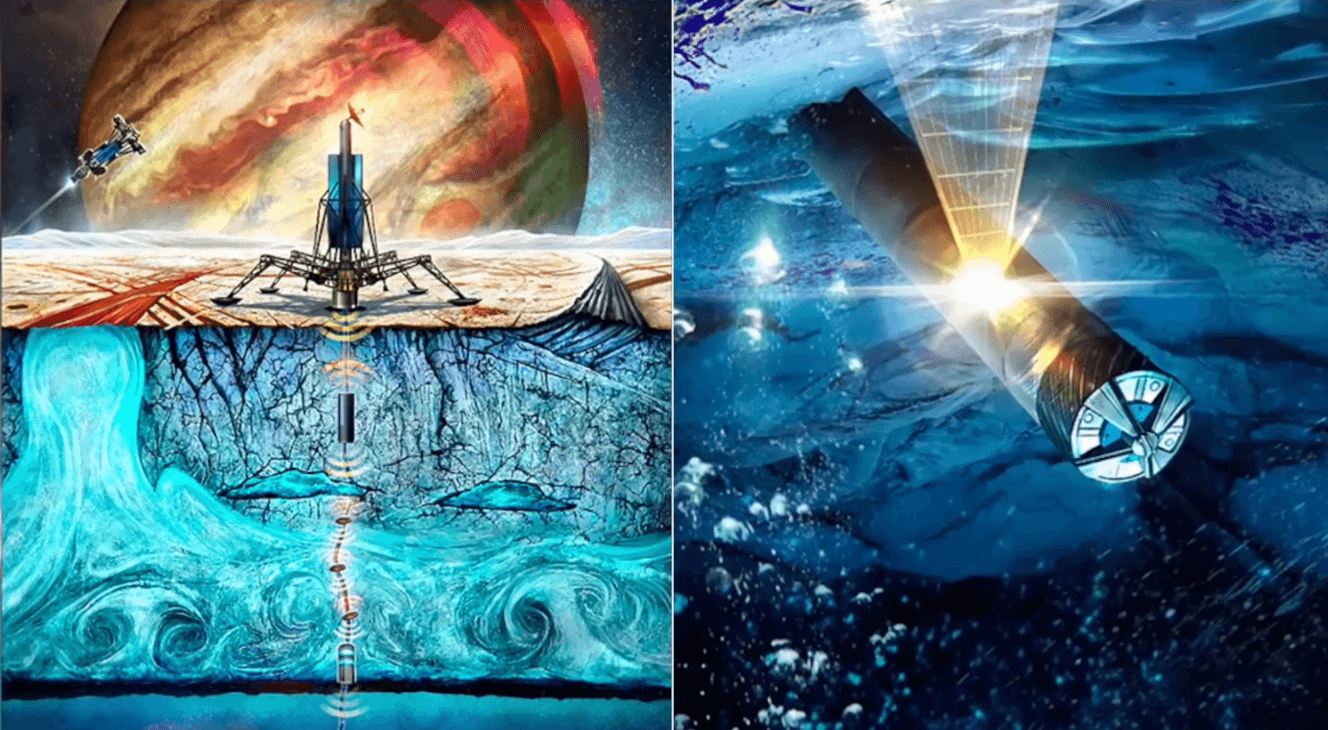
These nodules generate a voltage that splits seawater into hydrogen and oxygen through electrolysis. This "Dark Oxygen" suggests that life on other planets, such as Jupiter’s moon Europa or Saturn’s Enceladus, might not need a sun to breathe. They might have their own geological batteries providing life-sustaining gas in their sub-ice oceans.
NASA’s Interest: Earth as a Proxy for the Stars
Why is NASA exploring the Mariana Trench? They have identified five celestial bodies—Europa, Ganymede, Callisto, Enceladus, and Triton—that possess sub-ice oceans. By studying how the Mariana Snailfish uses specialized proteins to resist pressure, NASA is building a biological blueprint for what alien life might look like in the deep oceans of the solar system.
Furthermore, the discovery of "Giant Larvaceans"—tiny organisms that build complex, meter-wide mucus "houses" to filter water—reveals a biological nanotechnology that sustains the deep-sea carbon cycle. These "living machines" act as a biological pump, transporting nutrients to the abyss, a mechanism that could exist in any ocean world across the galaxy.
The Southern Gateway
Recent DNA analysis of these deep-sea monsters suggests a strange origin. Many of the Mariana Trench’s inhabitants share genetic markers with creatures from the Southern Ocean surrounding Antarctica. There appears to be a "global conveyor belt" of life that starts at the deepest trenches of the Antarctic and pumps species throughout the world’s oceans. Some explorers believe these trenches are not just cracks in the earth, but gateways to a high-pressure "inner world" that we have only begun to glimpse.
Visual Suggestions for this Post
The Deep-Sea Battery: Search for "polymetallic nodules on the seafloor" to show the small, dark rocks that are generating "Dark Oxygen."
The Snailfish Anatomy: Look for a CT scan or diagram of a Pseudoliparis swirei to show its hidden "inner teeth" and jelly-like exterior.
The Abyss Map: An image showing the scale of the Mariana Trench compared to Mount Everest to emphasize the sheer depth being discussed.