The Dodleston Messages: A 16th-Century Ghost in the Machine
Imagine renovating a 200-year-old cottage in a quaint English village, only to have your computer—a 1980s BBC Micro with no internet connection—start receiving messages from the year 1546. This isn't the plot of a new sci-fi thriller; it is the core of the Dodleston Message Incident, one of the most scientifically intriguing "time-slip" cases in history.
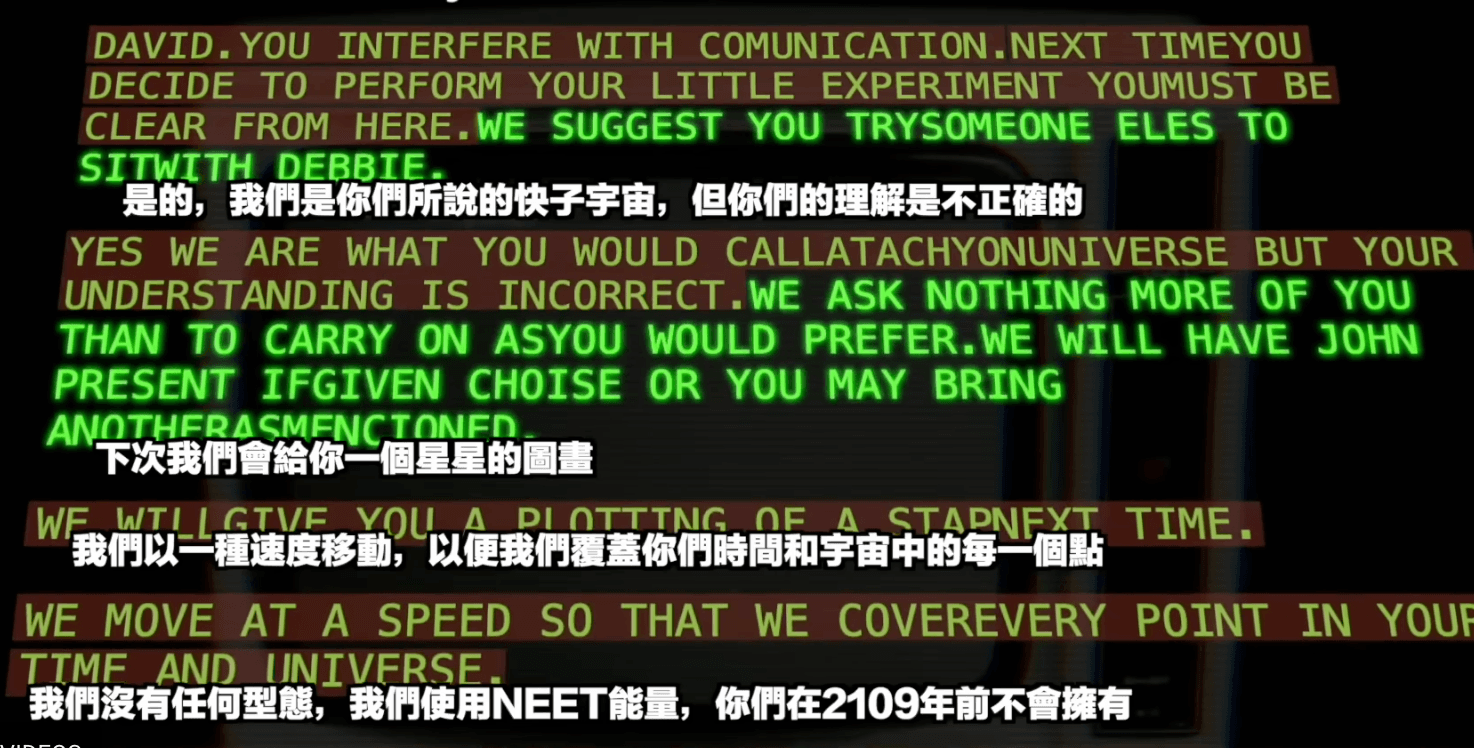
In 1984, Ken Webster, an economics teacher, began receiving prose on his computer screen written in Archaic English. The sender claimed to be Lucas, a man living in the same house four centuries earlier. But as the investigation deepened, a third party entered the chat: an entity from the year 2109.
The Three-Way Temporal Connection
The incident created a unique bridge between three distinct eras, each viewing the technology through a different lens:
| Era | Key Participant | Perception of the "Computer" |
|---|---|---|
| 1546 | Thomas Harden (Lucas) | A "Leaden Box" or "Devil's Lightbox." |
| 1985 | Ken, Debbie, and Peter | A tool for word processing and teaching. |
| 2109 | The "2109" Entity | A primitive interface used to communicate with the past. |
The Prophecies of 2109
What separates this story from a typical hoax are the five "prophecies" or scientific answers provided by the future entity. At the time of the BBC investigation in 1985, these answers seemed like gibberish. Today, three and a half of them have arguably come true.
1. The Supernova in Delphinus 🌟
2109 provided a star map and claimed that a star in the constellation Delphinus would become a quasar/nova. The Reality: In 2013 and again in 2019, major astronomical events were recorded in that exact region. For a 1985 prankster to guess the specific constellation for a future celestial event is statistically staggering.
2. Fermat’s Last Theorem 📐
When investigators tried to "trap" the entity with a math problem that had been unsolved for 300 years—Fermat’s Last Theorem—2109 simply replied that the solution would be found within the investigators' lifetimes. The Reality: In 1994, nine years after the message, Sir Andrew Wiles famously solved the theorem.
3. The "End" of Prime Numbers 🔢
The entity was asked for the largest known prime number. It replied, "We have no largest prime." The Reality: In 1985, this sounded like an error. However, in the age of modern computing and GPU acceleration, we now treat prime numbers as a constantly moving target defined by processing power. The concept of a "static" largest prime has been replaced by an infinite hunt.
The Physics: Tachyon Universes and Imaginary Dimensions
How could information travel through time without violating the laws of physics? The 2109 entity explained it through the concept of the Tachyon Universe.
In standard physics, the speed of light is a hard limit. However, mathematical models suggest a "mirror" universe where particles (Tachyons) always travel faster than light. The bridge between these two worlds is found in Imaginary Numbers.
Just as multiplying by the imaginary unit represents a 90-degree rotation in mathematics, the entity suggested that "time travel" is essentially a high-dimensional rotation of information. Because information (data) has no mass, it is far easier to "rotate" through the Tachyon universe than physical matter.
Fact or Fiction?
Critics point to linguistic inconsistencies, noting that some of "Lucas's" verbs don't perfectly match 16th-century syntax. However, supporters argue that a 19-year-old girl and an economics teacher in 1985 would have needed a PhD in linguistics and a future-seeing telescope to forge the historical and astronomical details provided in the 300+ messages.
Perhaps the most haunting part of the story is the final message from Thomas Harden (Lucas). He promised to write a book about his "friends from the future" and hide it in Oxford. As AI begins to scan every ancient manuscript in the world's libraries, we may be only a few clicks away from finding a 500-year-old book that mentions a "light box" and a man named Ken.
Whether it was a sophisticated technological prank by a local electronics firm or a genuine tear in the fabric of time, the Dodleston incident reminds us that our reality might be much thinner—and much more "connected"—than we think.