The 400-Million-Year-Old "Living Rubber": Decoding the Sea Cucumber
Have you ever seen a 20cm sea cucumber stretched by a master chef until it becomes a 91cm translucent sheet of "window paper," only to shrink back to its original size the moment it touches water? This isn't just a kitchen trick; it is a testament to a biological marvel that has survived five mass extinctions.
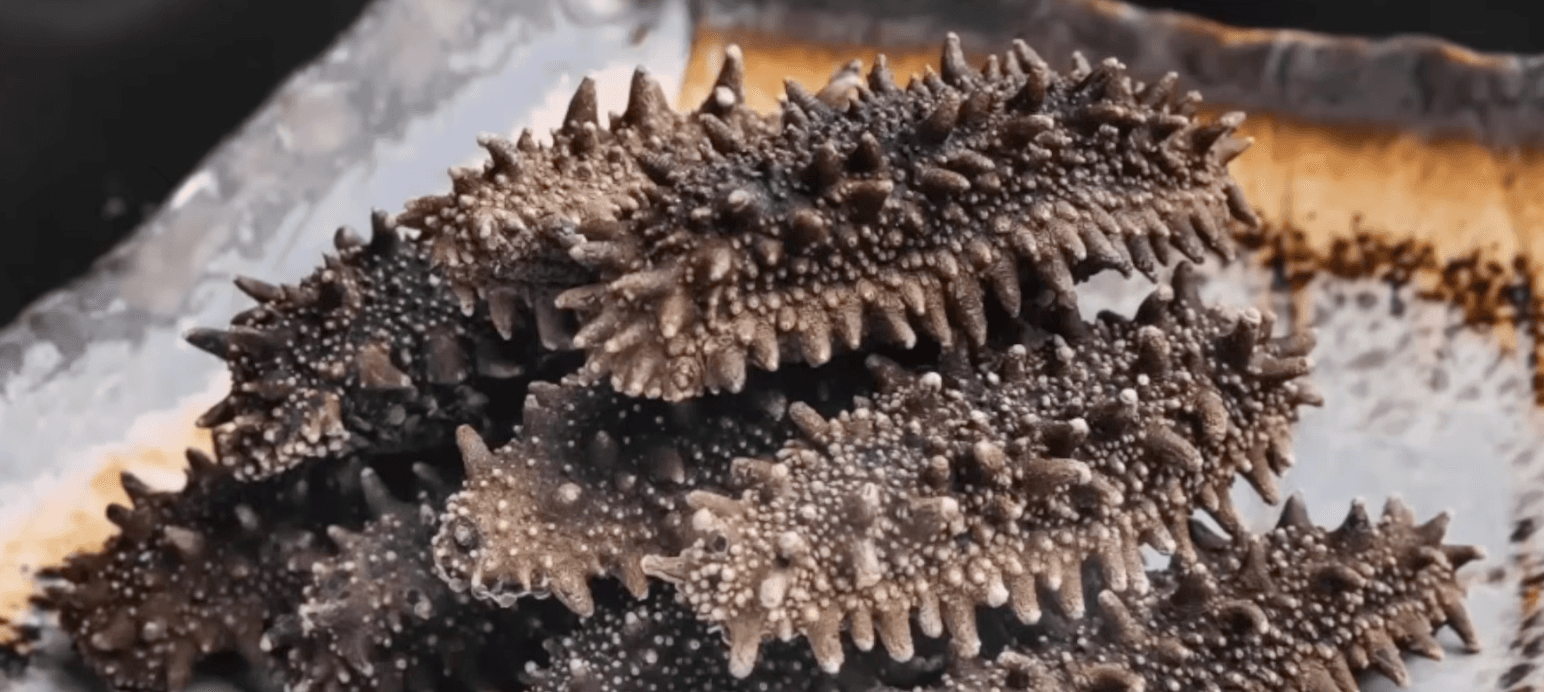
The Secret of "Shape-Shifting"
The sea cucumber is essentially a massive clump of collagen and connective tissue. This unique structure allows it to undergo extreme physical changes. In the culinary world, this property is the ultimate test of quality.
| Quality Indicator | What to Look For | Why it Matters |
|---|---|---|
| The "Bounce" Test | Drop it on the floor; higher bounce is better. | Indicates strong, healthy connective tissue. |
| The Spines (Cirri) | Must be thick and sturdy. | Thin, brittle spines suggest poor processing or health. |
| The Mouth | Should not be swollen. | Swelling indicates the animal was stressed or sickly. |
| The Feet | Full, granular texture on the belly. | Shows the sea cucumber was active and strong in the wild. |
From Armored Monster to Deep-Sea Ghost
Modern sea cucumbers look like harmless "sea pickles," but 430 million years ago, their ancestors were terrifying, armored "tentacle monsters." Over eons, they traded their external armor for internal "micro-bones"—tiny, anchor-shaped calcified fragments that you might occasionally feel as a slight grittiness near the mouth.
Surviving the Abyss
Sea cucumbers aren't just survivors; they are conquerors. In the Mariana Trench, 8,000 meters below the surface, they make up 90% of all animal biomass. They survive the crushing pressure through two chemical superpowers:
- Trimethylamine N-oxide (TMAO): Prevents water from crushing their proteins.
- Scylo-inositol: Stops proteins from collapsing under extreme weight.
Three Deadly Skills: The "Cthulhu" Survival Guide
Despite being a slow-moving tube of collagen, the sea cucumber is a "boss" of the ocean floor with three incredible defense mechanisms:
- The "Gutsy" Escape: When threatened, they can eject their internal organs (Cuvierian tubules) to entangle predators. These sticky, toxic threads distract the enemy while the sea cucumber crawls away.
- The "Deadpool" Regeneration: A sea cucumber can regrow its entire digestive system in weeks. Some species, if cut into three pieces, will simply grow into three separate sea cucumbers.
- The "Samurai" Sacrifice: If trapped or stressed by poor water quality, they release "autolytic enzymes" that literally dissolve their own bodies into a puddle of water within hours. It is the biological version of "death before dishonor."
The Business of "Sea Gold"
The history of sea cucumber consumption is a tale of international trade and culinary alchemy. While ancient Romans or Greeks ignored them, they became the "King of the Eight Treasures" in Chinese cuisine, largely due to two factors:
The Science of "Eating What You Are"
While doctors argue that stomach acid breaks down collagen into basic amino acids, some scientists wonder if our bodies are "lazy programmers." Perhaps our systems use the "code fragments" of sea cucumber collagen to repair our own skin and connective tissues more efficiently.
The Culinary Synergy
Sea cucumbers have no flavor of their own, but their porous structure is a sponge for "Umami."
- Northern Style: The famous Scallion Braised Sea Cucumber uses the secret of "Sea Intestine" (Urechis unicinctus) powder—a natural MSG used by Lu cuisine masters for centuries.
- Southern Style: The legendary Buddha Jumps Over the Wall slow-cooks sea cucumbers with abalone and shark fin, allowing the collagen to soak up the essence of the entire pot.
The "White Legend" and Modern Farming
You may have heard the proverb: "Thousand-year black, ten-thousand-year white." For centuries, the White Sea Cucumber was considered a mythical spirit of the sea. In 2018, a single kilogram of wild white sea cucumber sold for 331,000 RMB!
Today, thanks to innovative farmers, these "Sea Spirits" are being bred in labs. Furthermore, "North-to-South" breeding programs—where sea cucumbers are moved to warmer southern waters during the winter—have made this once-royal delicacy accessible to everyone.
Whether you enjoy them for the "regenerative" folklore or the unique texture, the sea cucumber remains one of the most resilient and mysterious inhabitants of our planet.