Angkor Wat: The Five Parallels to Atlantis
Many researchers suggest that Angkor Wat shares striking similarities with the legendary lost continent of Atlantis:
- Concentric Geometry: Both structures feature a series of circular walls and surrounding moats.
- Floating Foundations: Both were built on unstable ground; yet while Atlantis sank, Angkor Wat remained standing on a swamp for a millennium.
- Satellite Urbanism: Both were massive hub-cities supported by unknown technologies.
- Warrior Culture: Both possessed legendary military power—Atlantis with its navy, and Angkor with its armored war elephants.
- From Myth to Reality: Both were once dismissed as folklore until modern archaeology brought their true scale to light.
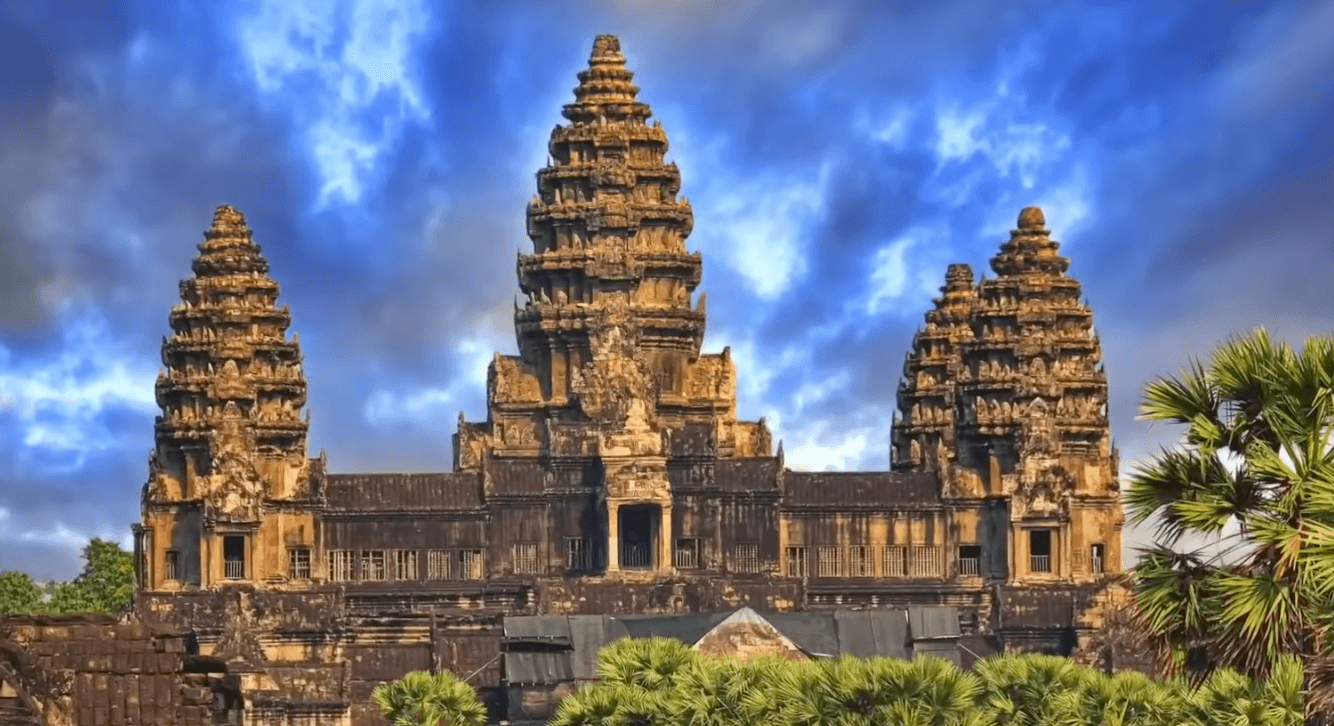
The Scale: A City the Size of Tokyo
In 1994, the Space Shuttle Endeavour used radar to peer through the thick canopy of the Cambodian rainforest. What it found redefined history: a sprawling urban complex covering 3,000 square kilometers—roughly the size of the 23 wards of modern Tokyo.
Dr. Evans later used LiDAR (Light Detection and Ranging) to strip away the vegetation digitally. The results confirmed that 800 years ago, Angkor was the largest pre-industrial city on Earth, housing over one million people at a time when London was just a small town.
Prehistoric "Black Technology": The Four-Crop Harvest
How did the Khmer Empire feed a million people in a jungle? Ancient Chinese records from the Yuan Dynasty noted a detail previously thought to be an exaggeration: "They harvest rice three or four times a year."
Today, scientists believe this was achieved through:
- Advanced Hydro-Engineering: A massive network of man-made canals and reservoirs (Barays) that functioned like a biological machine.
- The "Baray" System: These giant "city swimming pools" weren't just for show; they regulated water for year-round irrigation, independent of the monsoon cycles.
Engineering Miracles: The Floating Stone Myth
Angkor Wat consists of over 5 million stone blocks, weighing roughly 3 million tons—more than three Great Pyramids combined.
1. The Hydraulic Foundation
How does a million-ton stone mountain not sink into the mud? Engineers discovered that the Khmer used Laterite, a porous, iron-rich rock, as a hidden foundation.
The Sinking Solution: The 200-meter-wide moat isn't just a defense; it keeps the groundwater level constant. By maintaining a specific moisture level in the sand beneath the temple, the water actually acts as a structural support, preventing the "floating" foundation from shifting or collapsing.
2. The Mystery of the Iron Cramps
To lock these massive stones together, the Khmer used Iron Cramps (metal staples). This was the peak of 12th-century metallurgy. Curiously, chemical analysis shows the iron used in these cramps does not match local mines, leaving the origin of their massive iron supply a lingering mystery.
The Face of Peace: The King of 600 Million Gods
As the empire reached its peak under Jayavarman VII, the religion shifted from Hinduism to a unique form of Buddhism. The King introduced the concept of the "God of All Gods."
The famous stone faces of the Bayon Temple, with their enigmatic smiles, are believed to be the face of the King as Avalokiteshvara (the Bodhisattva of Compassion). This religious shift was a political masterstroke, using peace and inclusion to unite the warring factions of the Khmer Empire.
The sudden abandonment of Angkor Wat in the 15th century remains one of history's greatest "ghost stories." Whether it was climate change, a failing irrigation system, or the loss of their prehistoric technology, the jungle eventually reclaimed the stones, waiting for us to uncover their secrets once more.